How a gas reduction kiln works, and why it matters
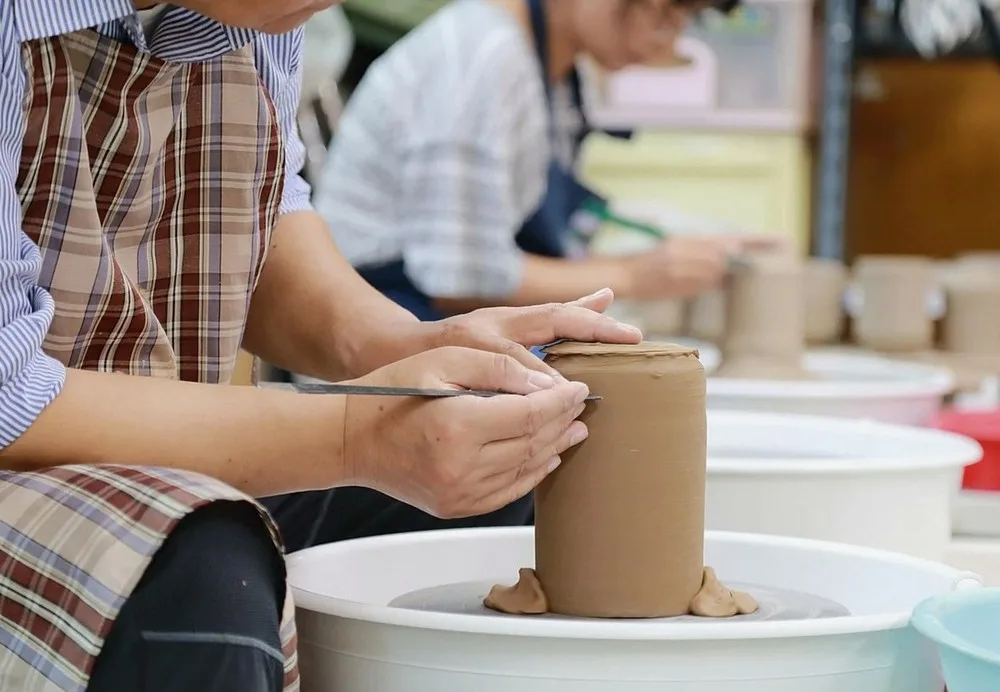
Most people who buy handmade ceramics have heard the phrase 'reduction fired' without being entirely sure what it means. It comes up in studio descriptions and on gallery labels, and it sounds technical in a way that can feel slightly off-putting. The process is actually not complicated to understand, and knowing a little about it changes the way you look at a finished piece.
The basic difference between oxidation and reduction
An electric kiln fires in an oxidation atmosphere: there is plenty of oxygen in the chamber throughout the firing, and the clay and glazes react in a predictable, consistent way. A gas kiln can be fired in oxidation too, but it can also be shifted into reduction by restricting the air supply to the burners. When there is not enough oxygen to fully combust the gas, the flame begins to pull oxygen from the clay and glaze surfaces instead.
This changes the chemistry of the iron and other metal oxides in the clay and glazes. Colours that would be tan or amber in oxidation become grey, blue-grey, or warm brown in reduction. Copper, which produces green in oxidation, can shift toward red. The results are less predictable than oxidation firing, which is part of why potters who work in reduction tend to talk about the kiln as a collaborator rather than a tool.
What a firing day looks like at Fresh Citadel
Sakura starts the kiln at 08:00 on firing days. The first phase is a slow climb in temperature to drive off any remaining moisture in the clay. This takes about two hours and the kiln is in light oxidation throughout.
Reduction begins at around 900 degrees Celsius and continues in stages up to the final temperature of approximately 1,250 degrees Celsius. The timing of each reduction phase affects the final colour, so Sakura stays at the kiln for the full nine hours and adjusts the damper and burner settings by observation rather than by a fixed schedule. She checks the colour of the flame at the spy hole and reads the draw rings she places in the kiln before each firing.
After the final temperature is held for about 45 minutes, the kiln is closed and left to cool for at least 36 hours before the door is opened. Opening too early risks thermal shock to the pieces and to the kiln structure itself.
Why the results vary between firings
No two firings produce identical results, even with the same clay, the same glazes, and the same target temperature. The weather affects the gas pressure. The position of each piece in the kiln affects how much reduction it receives. Small variations in glaze thickness change the way the surface responds.
This is not a flaw in the process. It is the reason that a handmade, reduction-fired piece looks different from a factory piece, and it is the reason that people who use these pieces every day tend to notice new things in them over time.
The kiln at Fresh Citadel fires roughly six times a year. New stock from each firing appears in the gallery on the Saturday after the pieces are ready. You can get the firing schedule by email if you sign up through the website.